How to Choose the Right Solar System Size
Choosing the right solar system size is one of the most important stages when planning a solar system for a home or business. Many customers think the main question is how many solar panels can fit on the roof, but in reality, that is only the starting point. A properly planned solar system is not measured only by size. It is measured by how well it fits the property, electricity consumption, site conditions and the customer’s long-term goals.
A system that is too small may fail to use the full potential of the roof. A system that is too large, without proper planning around consumption, tariffs, available space or technical limitations, may not be the most accurate financial or operational decision. The goal is not always to install the largest possible system. The goal is to install the right system for the specific property.
At Kn Energy, solar system sizing begins with understanding the customer and the site. The company does not work according to a fixed template. It checks what is right for the home, business, roof, electricity consumption and the result the customer wants to achieve over time.
Solar System Size Starts With Electricity Consumption
The first step in choosing the right solar system size is understanding the customer’s electricity consumption. A solar system for a private home or business should be reviewed according to real usage patterns: how much electricity is consumed throughout the year, whether consumption is stable or seasonal, whether there is high summer usage, whether there is significant daytime consumption, and whether future changes are expected, such as an electric vehicle, business expansion, pool equipment, pumps or additional electrical loads.
A private home with standard electricity consumption does not necessarily need the same system size as a home with high consumption, multiple air conditioners or an electric vehicle. A small business is also different from a factory, farm, agricultural structure or commercial property with steady daytime electricity usage.
Before deciding how many solar panels to install, it is important to understand what the system is supposed to achieve. Is the goal to reduce electricity bills? Generate income? Use available roof space? Improve energy independence? Prepare for energy storage in the future? Each goal may require a different planning approach.
Not Every Roof Produces the Same Result
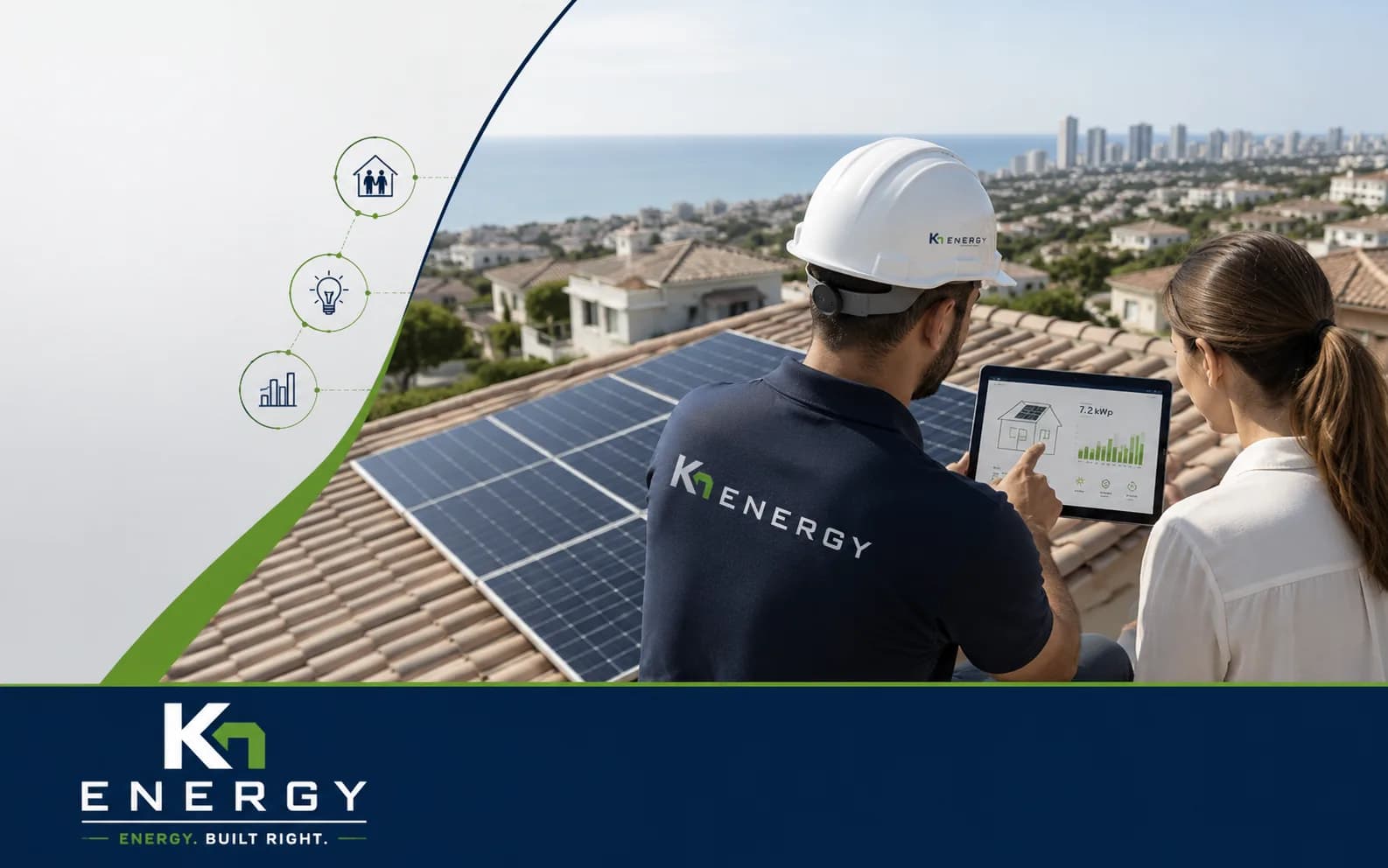
After reviewing electricity consumption, the roof itself must be checked. Roof area is important, but it is not enough on its own. The company must understand the roof type, installation directions, slopes, shading, water heaters, air conditioning units, openings, railings, work access, maintenance paths and areas where installation may not be safe or practical.
Two roofs of the same size can produce completely different results. One roof may be open, clean and well-oriented, while another may have shading or constraints that reduce the effective installation area. That is why system size cannot be chosen based only on square meters.
Proper solar system planning looks not only at how many panels can fit, but where they should be placed, in which directions, in what layout, and what the actual production quality is expected to be. In some cases, it is better to install fewer panels in the right locations than to force more panels into areas that reduce the overall value of the system.
System Size Is Not Determined by the Inverter Alone
One common mistake is treating the inverter size as if it is the system size. In practice, the size of a solar system is measured by the total output of the solar panels installed on the roof, not only by the inverter size.
For example, if a certain number of solar panels with a specific wattage are installed, the system size is determined by their total DC capacity. The inverter is a very important component, but it is part of the planning and not the only measure of the system.
Choosing the right inverter should be based on the system structure, panel layout, installation directions, connection limitations, usage profile and selected equipment. Poor matching between panels and inverter can affect system performance, operation and long-term quality.
Is It Always Worth Filling the Entire Roof With Panels?
Not always. In some cases, using the full roof area is the right decision, especially when the roof has high-quality usable space, suitable consumption or a financial model that supports it. But there are also cases where filling the entire roof is not necessarily the best choice.
It is important to check whether every roof area is truly suitable for installation, whether there is shading, whether future maintenance access is needed, whether walkways should remain open, whether there are safety limitations and what value each additional panel actually adds.
A good solar system is not always the one with the highest number of panels. It is the system in which every panel is installed in the right place, as part of a plan that serves the customer rather than simply increasing the number on paper.
Solar System Size for a Private Home
For a private home, system size should be reviewed according to annual electricity consumption, roof space, roof type, installation directions and the family’s goals. Some customers want to reduce electricity bills, others want to use a large roof for higher production, and some are thinking ahead about an electric vehicle, home expansion or energy storage.
In a residential solar system, it is important to balance roof utilization with clean and aesthetic execution. A system that is installed in an organized way, with proper planning of the panels, connections and inverter, feels very different from a system that was designed only to fit as many panels as possible.
At Kn Energy, the approach to private homes is personal and practical. The goal is to match the system to the home and the customer, not to overload the property with a solution that is not truly needed.
Solar System Size for a Business
For businesses, choosing the right solar system size can be more complex. A business may consume electricity at fixed hours, operate during the day, use heavy equipment, refrigerators, pumps, machinery, lighting, air conditioning or production systems. That is why it is important to understand the consumption profile and not only the roof size.
A commercial solar system should be reviewed from both a financial and operational perspective. The company must check roof size, grid connection size, actual consumption, project goals, future energy storage options and the best way to use the electricity produced.
A business choosing a solar system is not looking only for solar panels. It is looking for an energy solution that can affect expenses, stability and long-term financial planning.
Why Proposals Based Only on Panel Count Can Be Misleading
A solar system proposal that shows only the number of panels and the price is not enough to understand whether the system is right. The customer should know which panels are being offered, what their output is, which inverter will be installed, how the system is planned, what the installation directions are, whether there is shading, what is included in the proposal, and what level of service and warranty is provided.
Two systems with the same number of panels can produce different results if they are installed in different directions, with different equipment, different installation quality or different site conditions. That is why the customer should look at the full picture and not only at the headline of the proposal.
A professional solar company should be able to explain why a certain system size was chosen, what stands behind the design, and what the decision means for the customer.
Proper Planning Matters More Than a Bigger Number
In solar systems, bigger does not always mean better. The goal is to build a system that fits the customer, operates efficiently, uses the roof correctly and supports the financial and operational needs of the property.
Proper planning looks at the full picture: electricity consumption, roof structure, installation directions, shading, equipment, connections, budget, service and future options. Only after all the data is understood can the correct system size be determined.
At Kn Energy, the approach is not to sell the largest possible system. The approach is to build the right system. A properly built solar system should give the customer confidence, efficiency and long-term value.
The Kn Energy Approach
Kn Energy plans solar systems with the understanding that every property is different. There is no single size that fits everyone, and there is no ready-made solution that fits every home or business.
The company reviews the property data, electricity consumption, roof conditions, equipment type, installation method and the customer’s goals. Based on that, it is possible to design a solar system that truly fits the project, not only one that looks good on paper.
The customer should not choose system size based on instinct or based on whoever offers more panels. The decision should be based on professional planning, clear explanation and a company that knows how to take responsibility for the result.
Conclusion
Choosing the right solar system size requires a professional review of electricity consumption, roof conditions, installation directions, shading, grid connection size, customer goals and the technical options of the property. The largest system is not always the right system, and the number of panels alone does not tell the full story.
A good solar system is one that is designed according to the real data of the home or business, installed professionally and built to provide a clear energy solution for years ahead.
If you are considering a solar system for your home or business, Kn Energy can help you choose the right system size, plan the project professionally, install it properly and provide clear service throughout the process.