FAQ: How to Plan the Right Solar System Size?
Why is it important to plan the solar system size correctly?
The size of the system affects the number of panels, the planning process, equipment suitability, installation quality, and the long-term result the customer receives. A system that is not planned correctly may be too small, too large, or unsuitable for the roof conditions and actual electricity consumption.
Should the entire roof simply be filled with solar panels?
Not always. In some cases, using the full roof area may be correct, but in other cases, space must be left for access, maintenance, inspections, safe movement, and on-site adjustments. Professional planning does not only look at how many panels can fit, but at what should actually be installed.
What determines the right solar system size?
The system size is determined by a combination of electricity consumption, available roof area, roof orientation, slopes, shading, accessibility, physical limitations on site, the customer’s future needs, and the quality of the planning.
Why is electricity consumption important when planning the system?
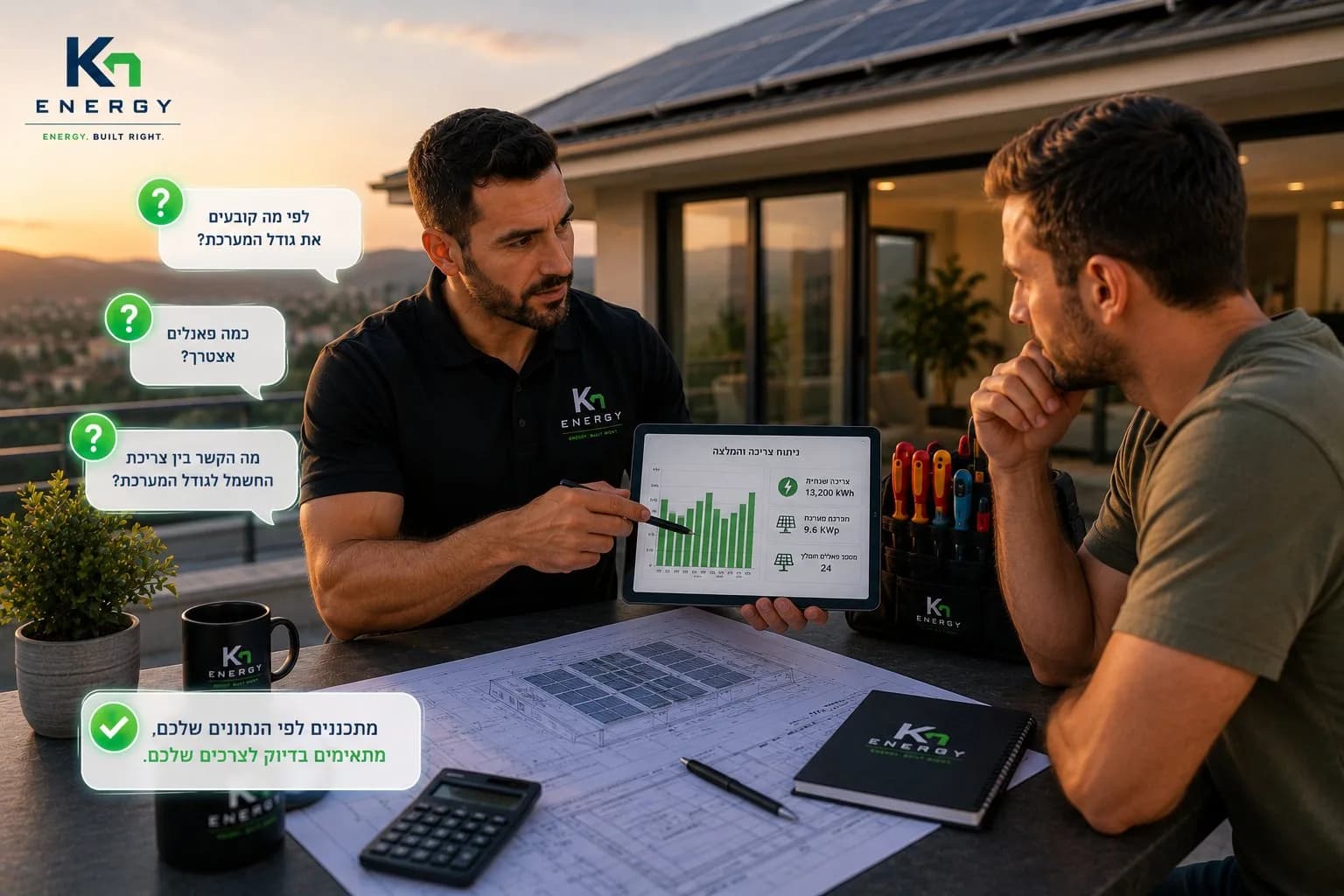
Electricity consumption helps define the customer’s real needs. Before planning a system, it is important to review electricity usage patterns, electricity bills, seasonal consumption, air conditioning use, the number of people in the home, and possible future needs.
Is a larger solar system always better?
No. A larger system is not necessarily a better system. If it does not match the electricity consumption, roof conditions, or site limitations, it may be less efficient or more complex than needed. The goal is to plan the right system, not simply the largest one.
How does shading affect the system size?
Shading can affect panel placement and the overall system design. Even if there is physical space for panels, a shaded area is not always suitable for installation. This is why trees, nearby buildings, water heaters, railings, or any other factor that may create shading should be reviewed in advance.
Should future needs be considered?
Yes, but responsibly. If the customer is planning to add an electric vehicle, expand the home, change electricity usage habits, or increase air conditioning use, this should be considered during planning. At the same time, the system should not be oversized based only on unsupported assumptions.
What is the difference between a general estimate and professional planning?
A general estimate can only provide an initial direction. Professional planning reviews the actual data: electricity consumption, roof conditions, shading, accessibility, limitations, equipment placement, and execution method. Only after a structured assessment is it possible to understand the right system size.
Why not choose a solar system based on price alone?
Price is an important consideration, but it is not enough. A low-priced proposal that is not based on proper planning may lead to inaccurate suitability, a less organized installation, or the need for adjustments later. It is important to check what the proposal includes, how the system was planned, and who manages the process.
How does Kn Energy plan the system size?
At Kn Energy, the process starts with a structured review of electricity consumption, roof conditions, shading, accessibility, and the customer’s needs. The goal is to plan a system that truly fits the property and the customer, with high-quality installation and a clear process from the first stage.
Summary
Planning the size of a solar system is a central stage in building a high-quality system. The right system is not necessarily the largest one, but the one that fits the electricity consumption, roof conditions, site limitations, and customer needs.
Kn Energy — Energy. Built Right.