How to Choose the Right Solar System Size?
One of the most important decisions before installing a solar system is choosing the right system size. Many customers ask: how many panels are needed? How many kilowatts are suitable for the home? Is it worth filling the entire roof? Is a larger system always better?
The professional answer is that system size should not be chosen based on a feeling, price alone, or simply by how much can fit on the roof. The size of a solar system should be determined by a combination of electricity consumption data, site conditions, roof size, roof orientation, shading, technical limitations, and proper long-term planning.
At Kn Energy, the goal is not to build the largest possible system at any cost, but to design a system that truly fits the customer, the property, and the full project process.
Why Is the Size of the System So Important?
The size of the system affects the planning, the number of panels, the nature of the work, the suitability of the equipment, the connection method, and the result the customer will receive over time.
A system that is too small may fail to use the roof’s potential properly. On the other hand, a system that is too large and not planned correctly may be inefficient, unsuitable for the customer’s consumption, or more complex than actually needed.
That is why the right question is not only “how much can be installed?”, but “what is the right system to install?”.
Step One: Reviewing Electricity Consumption
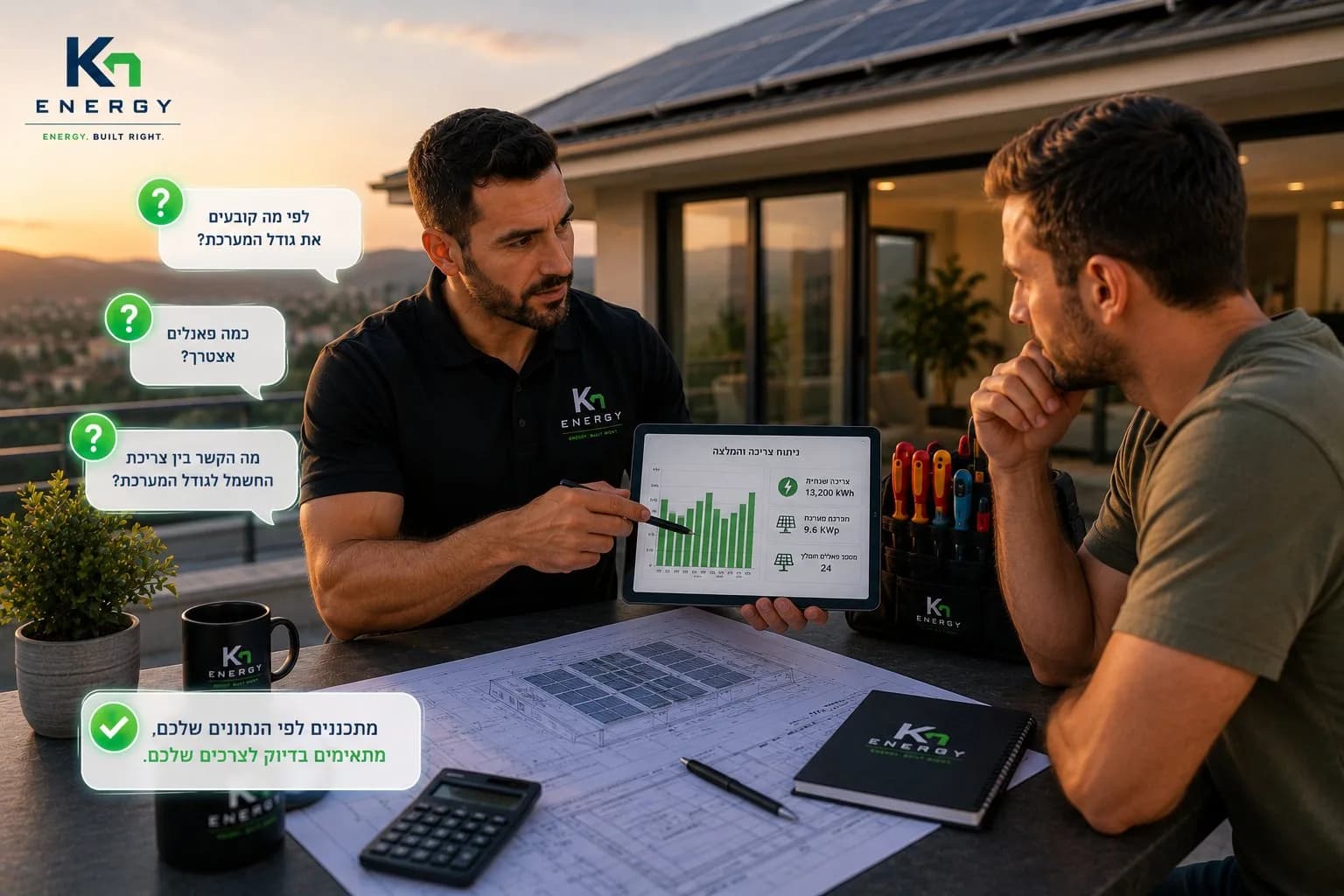
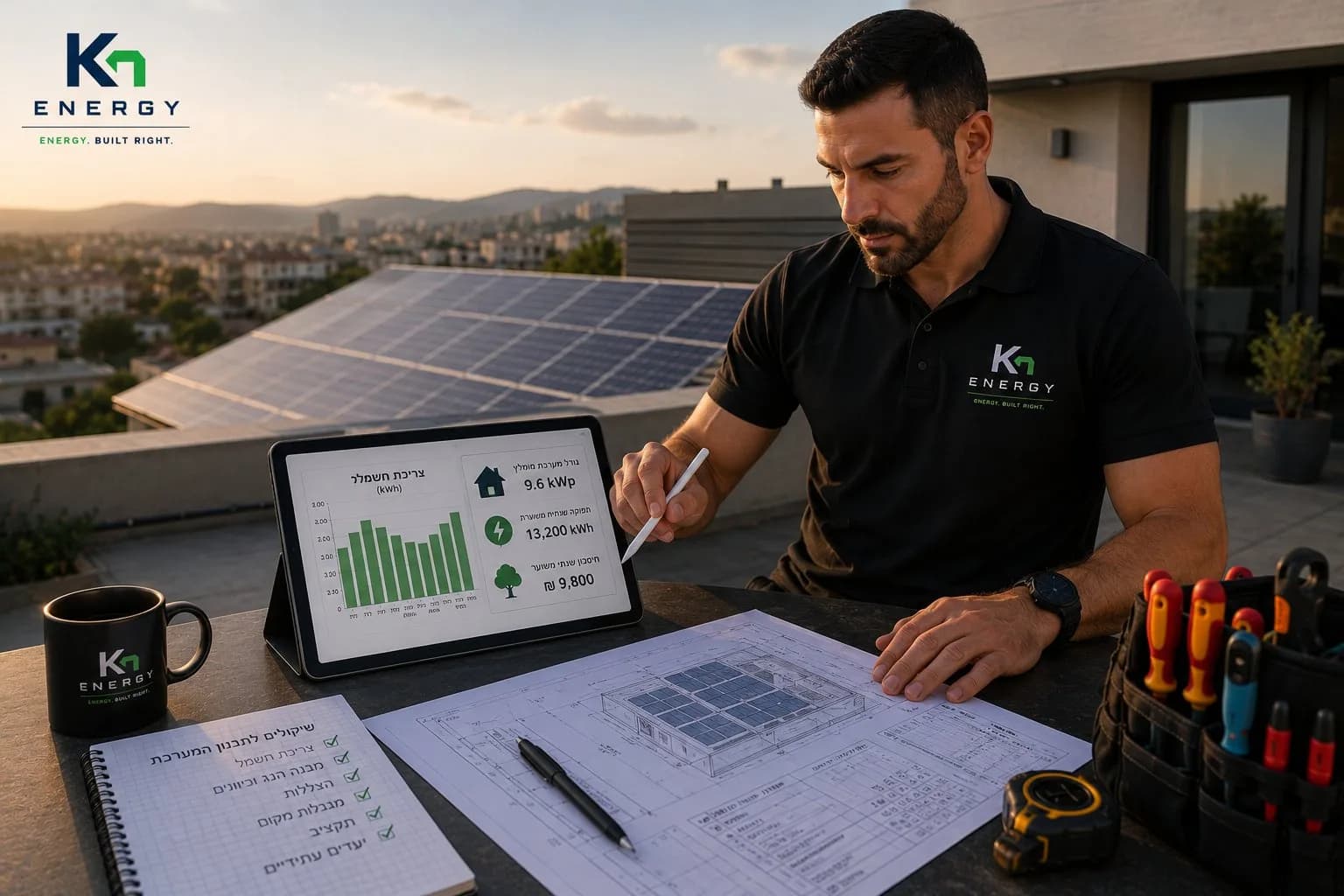
The basis for choosing the right solar system size is the customer’s electricity consumption. Before deciding on the size of the system, it is important to understand how electricity is actually being used.
This usually includes reviewing electricity bills, consumption patterns, seasonal usage, air conditioning use, the number of people in the home, significant electrical appliances, and expected future changes.
For example, a home with heavy air conditioning use during the summer may be very different from a home with lower consumption. A customer who is planning to add an electric vehicle, expand the house, or make a major change in electricity usage should also take that into account during the planning stage.
Step Two: Reviewing the Roof and Site Conditions
After understanding the electricity consumption, the next step is to review what can actually be done on site. Not every roof is suitable for the same system, even if the customer’s electricity consumption is high.
A roof assessment includes reviewing the available roof area, roof orientation, slopes, shading, access, existing obstacles, roof condition, and the way the panels can be arranged.
Shading is one of the most important factors. Even if there is physical space for panels, a shaded area may affect the system’s performance, so it is not always right to use every available meter.
Professional planning knows how to balance the desire to produce more electricity with the need to build a system that is organized, clean, and correct from an execution perspective.
Step Three: Not Filling the Roof Without Planning
A common mistake is thinking that the best solution is simply to fill the entire roof with panels. Sometimes that may be the right approach, but not always.
The roof must remain accessible for maintenance, inspections, and safe work. It is important to consider spacing, access between areas, equipment placement, physical limitations, and an organized installation plan.
A good solar system is not only about the number of panels. It is a system designed in a way that allows it to be installed properly, inspected, maintained, and managed over time.
Step Four: Matching the System to the Customer’s Needs
The right system size should take into account not only the current situation, but also reasonable future needs. If the customer is planning to increase electricity consumption, add an electric vehicle, expand air conditioning use, or make a significant change in the home, this should be considered during the planning stage.
At the same time, it is not right to overload the system based only on unsupported assumptions. It is important to distinguish between a real need and the desire to “install as much as possible.”
At Kn Energy, the planning process is based on a professional view: what is suitable now, what may change later, and what should be done responsibly.
Step Five: Choosing a System Based on Planning Quality, Not Only Size
The size of the system is only part of the picture. A solar system should be built according to professional planning, suitable equipment, high-quality installation, organized testing, and proper support until the process is completed.
A larger system that is not planned correctly is not necessarily a better system. Sometimes a slightly smaller system, planned correctly and installed with high quality, can be a more professional decision than a system that is too large and was designed without enough thought.
The focus should be on suitability, order, safety, execution quality, and proper project management.
What Can Affect the Size of the System?
Several key factors can affect the size of a solar system:
The customer’s electricity consumption.
Available roof area.
Roof orientation and slopes.
Existing or future shading.
Roof accessibility.
Panel and equipment placement.
Physical limitations on site.
The customer’s future needs.
Project management and connection process.
Each of these factors can change the system size that is actually suitable. This is why it is important not to rely only on a general estimate.
Why Not Choose Based on Price Alone?
Price is an important part of the decision, but it cannot be the only consideration. When choosing a system based only on price, the important questions may be missed: Is the size suitable? Is the planning correct? Will the installation be high quality? Is there organized support? Does the customer understand what they are receiving?
A professional proposal should explain what is planned, why it fits, what the process includes, and what the next steps are.
With a solar system, a low price without quality planning may cost more later.
How Kn Energy Approaches Solar System Size Selection
At Kn Energy, choosing the size of the system begins with an organized assessment, not a guess. The goal is to understand the electricity consumption, review the site conditions, examine the relevant options, and offer a system that fits the customer professionally.
The approach is not “as large as possible,” but “as correct as possible.”
A proper system is one that fits the property, is planned correctly, is installed with quality, and is managed through a clear process.
This is exactly what our slogan means:
Kn Energy — Energy. Built Right.
Summary
Choosing the size of a solar system is a decision that should be made professionally. It is not enough to check how many panels can fit on the roof, and it is not right to choose a system only by price or based on a general estimate.
To choose correctly, it is important to review electricity consumption, roof conditions, shading, accessibility, future needs, and the quality of the planning. A good system is not necessarily the largest system, but the system that truly fits the customer and the property.
At Kn Energy, the focus is on organized planning, professional suitability, and high-quality installation — so the system is built correctly from the first stage.
Kn Energy — Energy. Built Right.