What Should You Check Before Installing a Solar System?
Before installing a solar system, there is one stage that should not be skipped: a professional review of the data. Many customers focus on how much the system will cost or how many panels can be installed, but the right decision actually begins long before the proposal.
A solar system is a project that must fit the property, the electricity consumption, the roof conditions, the installation method, and the required stages until the process is completed. When these things are not checked in advance, problems may appear during execution: inaccurate planning, required adjustments, delays, lack of clarity, or an installation that does not properly use the site conditions.
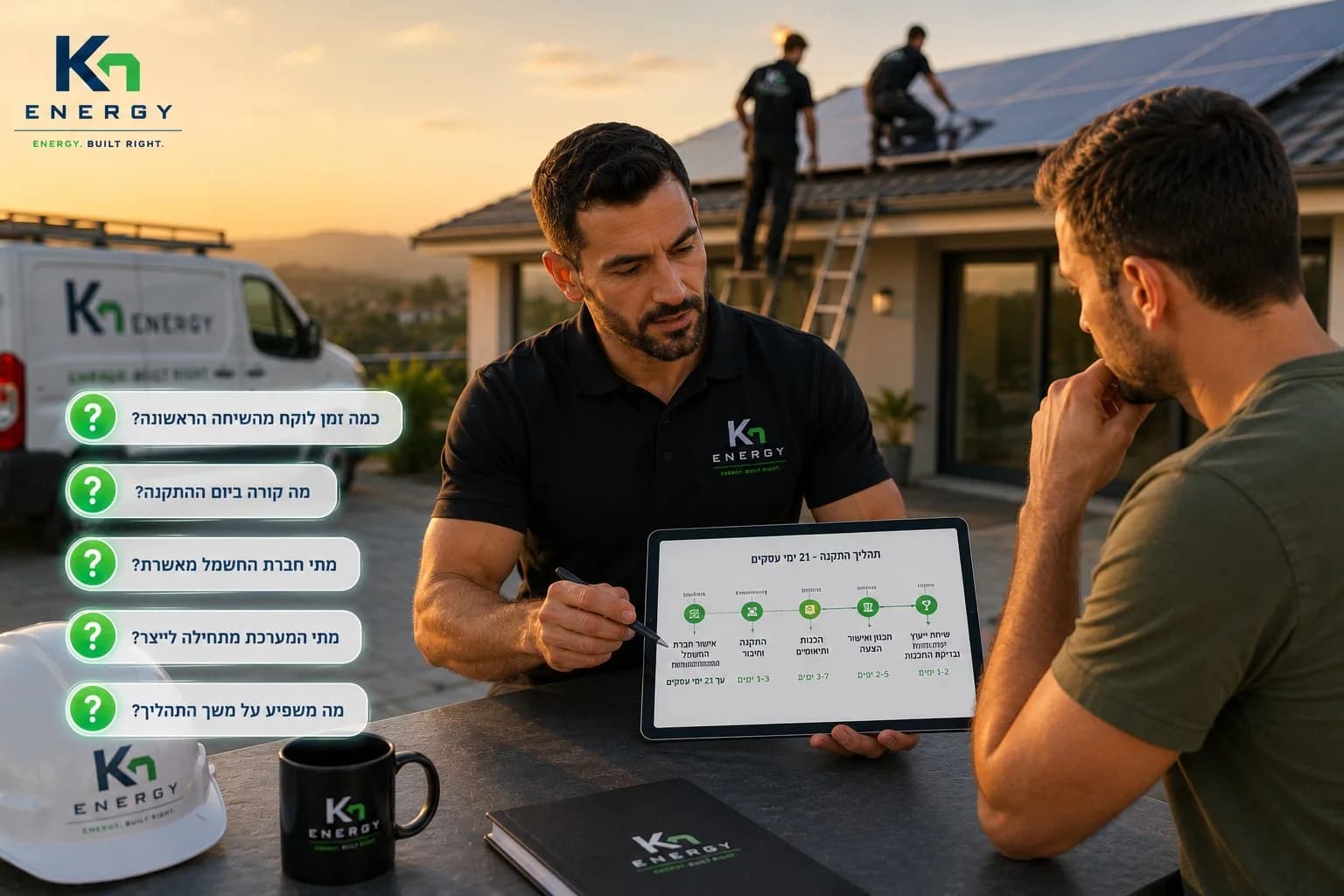
At Kn Energy, the entire process is handled in-house — from assessment and planning, through project management and installation, to testing, coordination, and service. The goal is to make sure the system is built correctly from the very first stage.
Why Is It Important to Check the Data Before Installing a Solar System?
A preliminary assessment makes it possible to understand whether the property is suitable for a solar system, what system size should be planned, where the panels should be placed, what limitations exist, and what is required in order to perform a high-quality installation.
Without a structured assessment, the proposal may be too general. A solar system should not be built based on guesswork or partial information. It should be built according to real data from the property and the customer.
A professional assessment before installation can save time, prevent mistakes, and help the customer understand exactly what process they are entering.
Step One: Reviewing Electricity Consumption
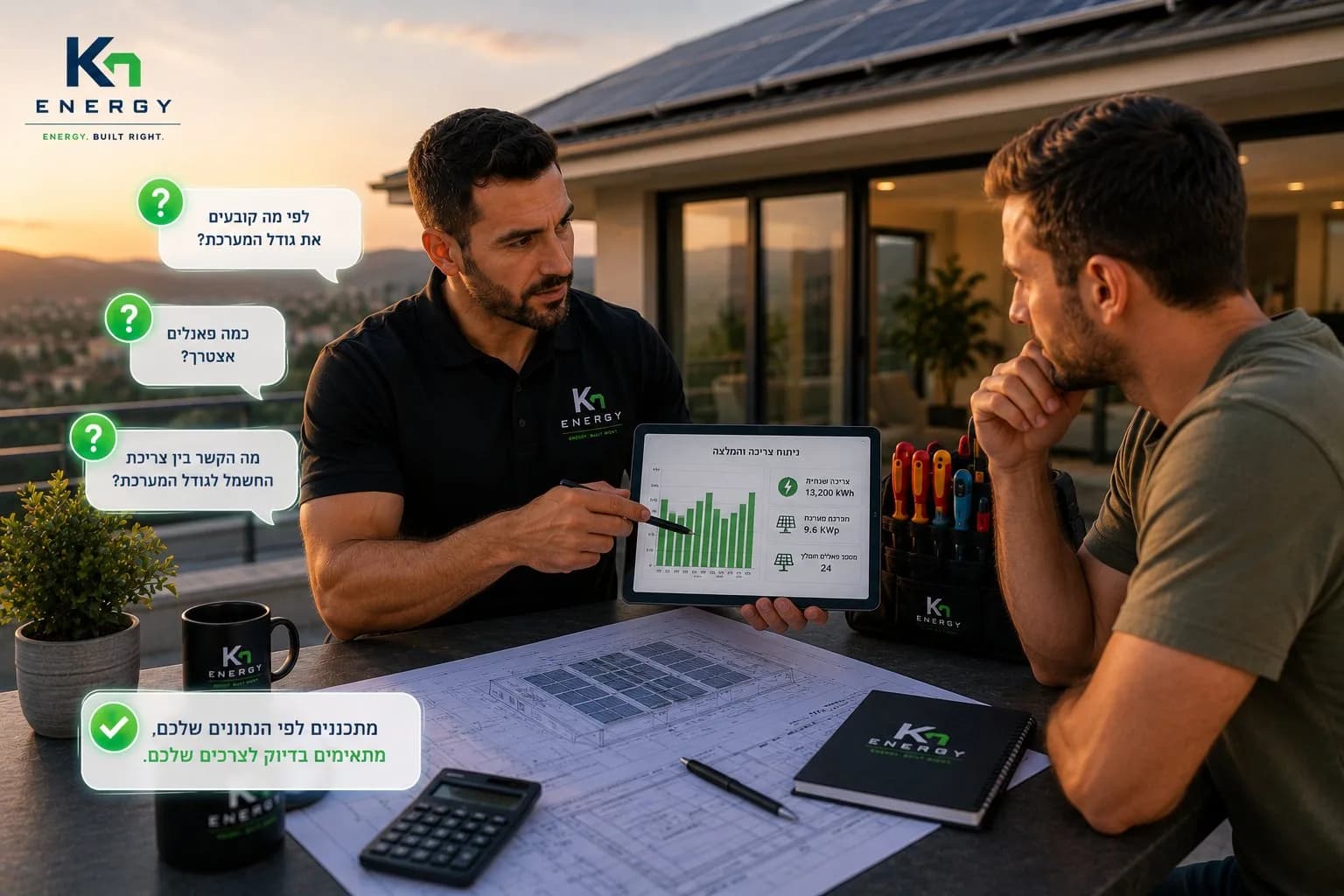
The basis for planning a solar system is the customer’s electricity consumption. Before deciding on system size or the number of panels, it is important to understand how electricity is actually being used.
This usually includes reviewing electricity bills, consumption patterns, seasonal usage, air conditioning consumption, the number of people in the home, and possible future needs such as an electric vehicle, home expansion, or changes in consumption habits.
The goal is not to plan the largest possible system, but a system that fits the customer’s real needs.
Step Two: Reviewing the Roof and Site Conditions
After understanding the electricity consumption, the roof itself must be reviewed. Not every roof is suitable for the same system, and not every available space is actually right for installation.
A roof review includes checking the available roof area, roof orientation, slopes, accessibility, roof condition, existing obstacles, and possible panel layout.
It is also important to check whether there is enough space for safe work, future access for maintenance, and an organized installation. A roof that is too crowded or not properly planned may make both installation and future maintenance more difficult.
Step Three: Checking Shading
Shading is one of the most important factors in solar system planning. Even if there is enough physical space for panels, an area that is shaded during part of the day is not always suitable for installation.
Shading may come from trees, nearby buildings, water heaters, railings, walls, antennas, or any other element located on or near the roof.
A shading review helps determine where the panels should be placed and which areas should be avoided. Proper planning does not only ask “how much can fit?” but “where is it right to install?”.
Step Four: Checking Accessibility and Work Safety
Accessibility is an important part of the planning process. The installation team must be able to reach the roof safely, perform the work in an organized way, and leave future access for inspections or maintenance.
When accessibility is not checked in advance, delays may appear on installation day, or adjustments may be required that were not taken into account.
A professional company should understand in advance how the work will be carried out on site, rather than discovering avoidable issues on the day of installation.
Step Five: Checking the Correct System Size
The system size should be determined by a combination of electricity consumption, roof conditions, shading, physical limitations, and reasonable future needs.
A larger system is not always better. Sometimes a slightly smaller system, planned correctly and installed with high quality, is a more professional decision than an oversized system that does not fit the site conditions.
The goal is to plan the right system — not simply to fill the roof with panels.
Step Six: Checking the Company Managing the Project
Beyond the technical data, it is important to check who is managing the project. A solar system includes assessment, planning, installation, coordination, testing, and support until the process is completed.
That is why it is important to understand whether there is one clear address managing everything, who performs the work in practice, whether the process is handled within the company or passed between different parties, and whether the customer receives clear support throughout the process.
At Kn Energy, the work is handled in-house in order to maintain control over quality, coordination, and professional responsibility throughout the project.
Step Seven: Reviewing the Proposal and Clarity for the Customer
A proposal for a solar system should be clear and organized. The customer should understand what is being planned, what the process includes, what will be performed in practice, and what the next steps are.
A proposal that does not clearly explain the process may create confusion and uncertainty. Price is important, but it is not enough. It is important to understand what stands behind the price and how the company plans to execute the project.
A professional proposal should reflect planning, order, responsibility, and understanding of the data.
What Can Happen If These Things Are Not Checked in Advance?
When a professional assessment is not performed before installing a solar system, problems may occur: inaccurate planning, incorrect panel placement, ignoring shading, difficult access, required on-site adjustments, delays, or a system that does not properly match the customer’s electricity consumption.
Many of these issues can be prevented in advance through structured assessment and proper planning.
A good solar system starts before installation — at the stage where the data is checked and professional decisions are made.
How Kn Energy Handles the Process
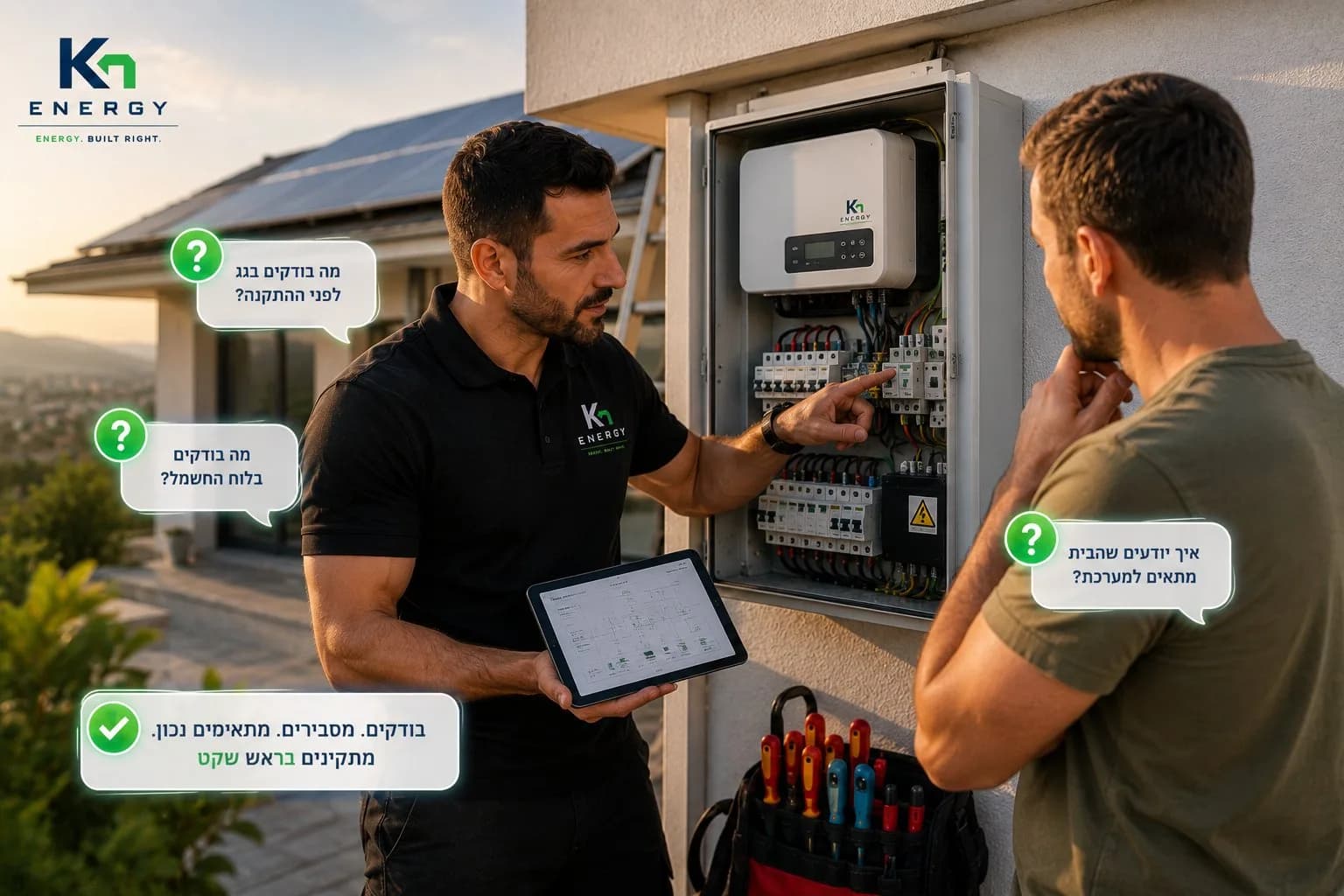
At Kn Energy, the process begins with a structured review of the data: electricity consumption, roof conditions, shading, accessibility, system suitability, and the customer’s needs.
After that, the project moves through professional planning, coordination with the customer, high-quality installation, testing, and support until the process is completed.
Because the process is handled in-house, the project can be managed in a clearer and more consistent way, with one professional responsibility throughout the entire process.
This is exactly what our slogan means:
Kn Energy — Energy. Built Right.
Summary
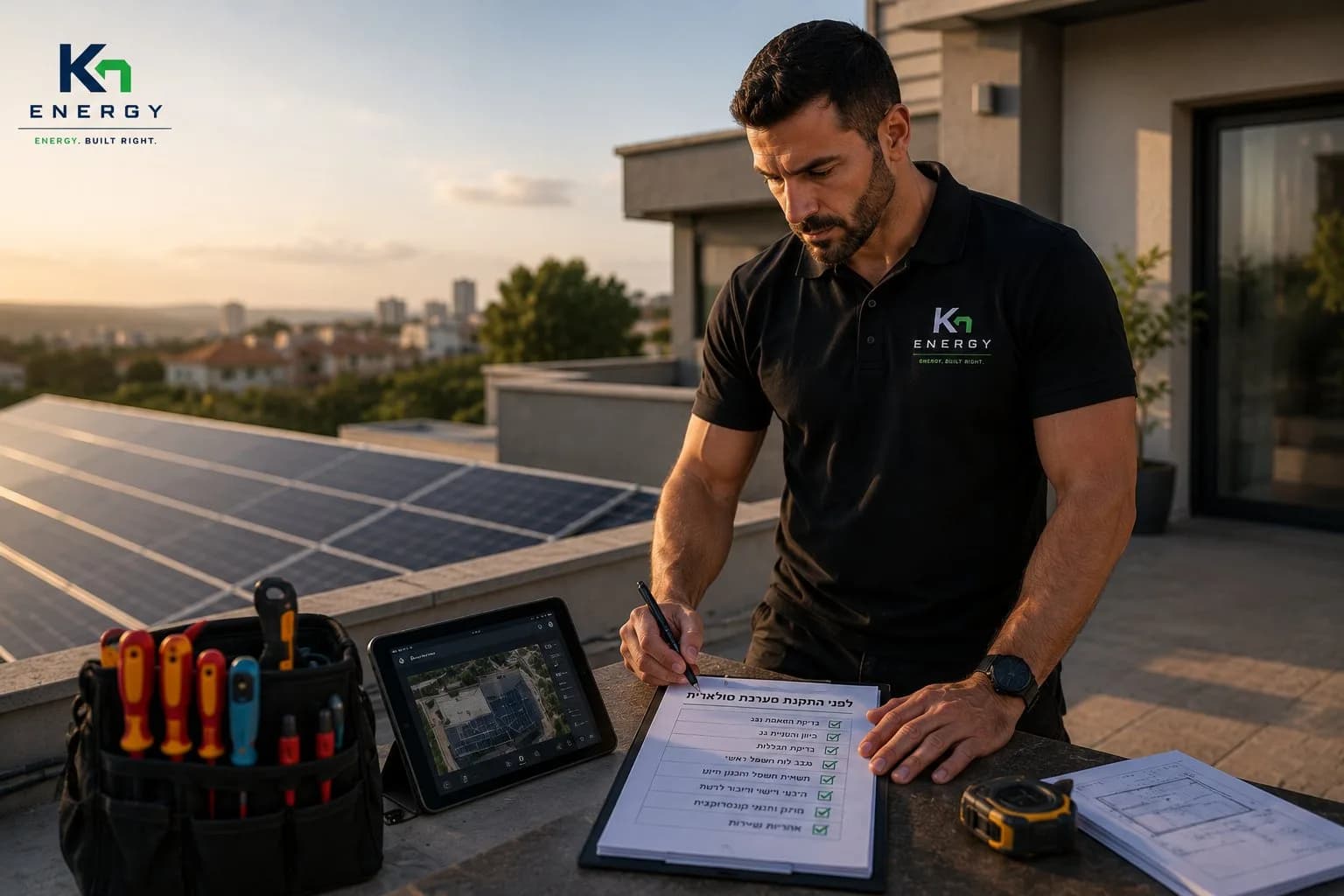
Before installing a solar system, it is important to review electricity consumption, roof condition, shading, accessibility, system size, planning quality, and the company managing the project.
A proper assessment before installation can prevent mistakes, save time, improve execution quality, and help the customer receive a system that truly fits the property and their needs.
At Kn Energy, the focus is on a professional, organized, and responsible process — from the first assessment through project completion.
Kn Energy — Energy. Built Right.